20 Botanical Brush Stamps Procreate: A Practical Evaluation for Digital Artists
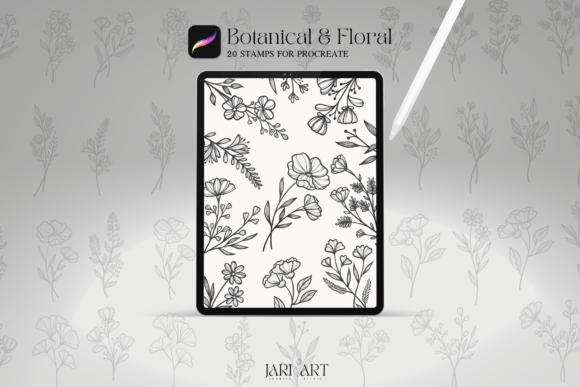
In the expansive ecosystem of digital illustration tools, specific asset packs often emerge to solve distinct creative bottlenecks. The 20 Botanical Brush Stamps Procreate collection, created by freelance digital artist Jari.art, represents one such resource designed to streamline the process of adding organic detail to digital canvases. For artists aged 20 to 50 who are weighing their options between hand-drawing every leaf or utilizing pre-made stamps, understanding the utility, limitations, and aesthetic value of this specific pack is essential before integrating it into a workflow.
This evaluation explores what makes these botanical stamps distinct, how they compare to alternative methods of creating floral elements, and the specific scenarios where they offer the most value. By examining the technical constraints and artistic possibilities, creators can determine if this tool aligns with their project requirements or if a different approach might serve them better.
Defining the Utility of Botanical Stamp Brushes
The core function of the 20 Botanical Brush Stamps Procreate set lies in its ability to replicate complex natural forms with a single tap or drag. Unlike standard brushes that simulate texture through algorithmic grain or pressure sensitivity, stamp brushes utilize high-resolution raster images as the brush tip. When an artist uses a stamp from this collection, they are essentially placing a pre-rendered vector or pixel-perfect image onto the canvas, which can then be manipulated using Procreate's transformation tools.
What distinguishes this particular set from generic floral brushes is the curated nature of the designs. Created with a focus on specific botanical aesthetics, the 20 included stamps cover a range of foliage types, from delicate wildflowers to structured leaves. This curation saves the user time in sourcing individual assets. Instead of searching through multiple libraries for compatible styles, the artist receives a cohesive set where line weights, opacity levels, and color palettes (if applicable) are consistent. This consistency is crucial for maintaining visual harmony in illustrations that require repeated elements, such as background patterns or border decorations.
Furthermore, the "stamp" mechanism offers a level of precision that freehand drawing often struggles to match without significant practice. For professionals who need to deliver work quickly while maintaining a high standard of anatomical correctness in plant life, these stamps provide a reliable shortcut. They allow the artist to focus on composition and color theory rather than spending hours perfecting the vein structure of a single leaf.
Comparative Analysis: Stamps Versus Alternatives
When evaluating the 20 Botanical Brush Stamps Procreate, it is necessary to compare them against other common methods for incorporating flora into digital art. The primary alternatives include freehand drawing, vector-based shape libraries, and procedural generation tools.
Freehand Drawing remains the gold standard for unique, bespoke artwork. There is no substitute for the organic variation that comes from a human hand. However, freehand drawing is time-intensive. If a project requires fifty identical ferns or a dense field of flowers, drawing each one individually is inefficient. In contrast, the stamp brushes allow for rapid iteration. The tradeoff is potential repetitiveness; if not used carefully, the same stamp placed multiple times can look artificial. To mitigate this, experienced users often rotate, scale, and layer the stamps with varying opacities to break up the pattern.
Vector Libraries offer another alternative. Many designers import SVG files of plants into their workflow. While vectors provide infinite scalability, they do not integrate as seamlessly into Procreate's raster-based environment as native brush stamps. Importing vectors often requires flattening or tracing, which adds steps to the workflow. The 20 Botanical Brush Stamps Procreate bypasses this friction entirely, functioning natively within the app's engine. This makes them particularly suitable for artists who prefer to stay within the Procreate interface without switching to external software like Adobe Illustrator.
Procedural Brushes, which generate random variations based on algorithms, offer variety but lack control. An artist cannot guarantee exactly which leaf shape will appear next. The stamp brushes provide deterministic results; you know exactly what you are getting when you place the mark. This predictability is vital for commercial projects where client approval depends on specific visual outcomes.
Strengths and Limitations of the Collection
Every digital asset has a ceiling of utility, and the 20 Botanical Brush Stamps Procreate is no exception. Its primary strength is efficiency. For illustrators working on editorial pieces, book covers, or social media graphics where deadlines are tight, these brushes significantly reduce production time. The collection allows for the rapid construction of lush environments that would otherwise take days to render manually.
A secondary strength is the artistic direction provided by Jari.art. Because the creator is a practicing digital artist, the stamps are likely optimized for the way Procreate handles layers and blending modes. They are not just raw images; they are functional tools designed to interact with the software's specific rendering engine. This attention to detail ensures that the edges remain crisp and the integration with hand-painted backgrounds feels natural.
However, there are clear limitations. The most significant constraint is platform compatibility. As noted in the product details, these brushes only work on Procreate. This is a critical decision factor for artists who use multiple devices or platforms, such as those who switch between iPad Procreate and desktop software like Photoshop or Clip Studio Paint. If your workflow is cross-platform, investing in a Procreate-exclusive pack may limit your versatility unless you have a dedicated tablet setup.
Another limitation is the finite number of assets. With only 20 stamps in the set, there is a risk of overuse. In large-scale compositions, relying solely on these 20 shapes can lead to a repetitive look. Artists must be willing to supplement these stamps with hand-drawn details or other resources to maintain visual interest. Additionally, while the stamps are high quality, they are static. They do not react to stylus tilt or speed in the same way a dynamic airbrush does, meaning the artist must rely on manual manipulation to create depth and variation.
Decision Factors: When to Choose This Tool
Determining whether the 20 Botanical Brush Stamps Procreate is the right choice depends heavily on the nature of the project and the artist's existing skill set.
This tool is an ideal fit for:
- Pattern Designers: Those creating seamless repeats for textiles or wallpapers will find the consistent style and ease of placement invaluable.
- Concept Artists: Professionals needing to block out environments quickly can use these stamps to establish mood and density without getting bogged down in fine details during the sketch phase.
- Illustrators with Tight Deadlines: Freelancers juggling multiple commissions can leverage these assets to accelerate the rendering phase of botanical subjects.
- Beginners Struggling with Anatomy: Artists who find drawing realistic leaves challenging can use these stamps as a reference or a base to paint over, effectively learning the structure while producing a finished piece.
Conversely, readers may need to consider other options if:
- Working Outside Procreate: If the final output requires editing in non-Apple ecosystems, the incompatibility of these brushes makes them a poor investment.
- Pursuing Hyper-Realism: While the stamps are detailed, true hyper-realism often requires the nuanced imperfections of hand-drawing or high-end 3D modeling. Stamps can sometimes feel too "perfect" or flat for photorealistic goals.
- Seeking Infinite Variety: If a project demands thousands of unique plant variations, a small pack of 20 stamps will inevitably fall short, requiring the purchase of larger libraries or custom asset creation.
Practical Integration Strategies
To maximize the value of the 20 Botanical Brush Stamps Procreate, artists should adopt strategies that mask the repetitive nature of stamps. One effective technique is to use the "Transform" feature extensively. By rotating, flipping, and scaling the stamps after placement, the eye is less likely to detect identical copies. Layering is also key; placing a darker stamp behind a lighter one, or using clipping masks to apply color overlays, can integrate the stamp into the surrounding painted environment more naturally.
Additionally, these brushes work best when combined with traditional painting techniques. Rather than letting the stamp stand alone as a flat graphic, artists can paint shadows and highlights directly over the stamped image. This hybrid approach leverages the speed of the stamp while retaining the tactile quality of hand-painting. It creates a workflow where the stamp serves as a structural foundation, upon which the artist builds atmosphere and lighting.
Final Considerations for the Digital Artist
The 20 Botanical Brush Stamps Procreate by Jari.art represents a focused solution for a specific problem: the efficient creation of botanical elements within a mobile-first digital workflow. It is not a replacement for artistic skill, nor is it a universal fix for all illustration needs. However, for the right user—specifically those committed to the Procreate ecosystem and seeking to balance speed with quality—it offers a distinct advantage.
Ultimately, the decision to use these brushes should come down to a cost-benefit analysis of time versus customization. If the time saved allows the artist to focus on higher-level creative decisions, such as composition and storytelling, then the tradeoff of using pre-made assets is justified. By understanding the strengths and boundaries of this tool, artists can incorporate it into their toolkit effectively, enhancing their productivity without compromising the integrity of their final artwork.